| Innovation is a foliage for those who look its direction. This truism applies to what TECNO, phone makers just did by buying to the market crave. Its a step in the right direction I must observe. |
Now, as
TECNO continue to prove itself as one of the leading smartphones brand,
it has announced its partnership with Blackberry on the BBM mobile
application. Tecno Phones run on the prestigious Android OS which has
already conquered the heart of most smartphone users in the world.
Blackberry messenger was initially only available on Blackberry phones
which is also very prominent especially in the Nigerian market,
“Everybody has a BB pin”… Well, now BBM is available on the android
system and customers can enjoy even more features with this new version,
some of those listed below: |

Showing posts with label Mobile Technology. Show all posts
Showing posts with label Mobile Technology. Show all posts
Friday, 25 October 2013
TECNO Goes A Step Up, Partners With Blackberry On BBM For Android Application

Wednesday, 10 April 2013
See The TECNO Android Smartphone N7 With High-end Performance Exposure.
It
is reported that TECNO will launch a new smartphone N7, an enhanced
version of N3, with the combination of combination of Android 4.0 Ice
Cream Sandwich with a 1GHz dual core CPU, running on a 5.0 inches large
touchscreen. Other notable specs include a 5 mega pixel rear camera with
flash, a 0.3 mega pixel front camera, 4GB of ROM and 512GB of RAM.
TECNO, as a rule, will offers an 8GB memory card with purchase of every
smartphone, with the device supporting up to 32GB memory cards. The
TECNO Android smartphone N7 is expected to be released in January next
year.

Saturday, 6 April 2013
Pros & Cons Of Mobile Number Portability In Nigeria
Disclaimer:
Please, this is a personal submission over the behaviours of mobile
phone network operators in Nigeria, therefore, don't crucify me for
saying my mind. Thank you.
MNP is the acronym for Mobile Number Portability. Every Nigerian knows that the telecoms regulator in Nigeria, the NCC have long been promising MNP to Nigerians for a long time now. The more Nigerians expected this process to begin within the telecoms operators in Nigeria, the more it appears that it can never be possible.
MNP is the acronym for Mobile Number Portability. Every Nigerian knows that the telecoms regulator in Nigeria, the NCC have long been promising MNP to Nigerians for a long time now. The more Nigerians expected this process to begin within the telecoms operators in Nigeria, the more it appears that it can never be possible.
Sunday, 31 March 2013
The Consumers Sneer As MTN Launches 5MB For N5 Plan
Seems the News mill and all things MTN related, on how they waggle the Nigerian consumer market is unending. Just a fews back, they rolled time on their Blackberry MTN subscription. Before then, internet access on their blackberry portal was unlimited, thereby providing Nigerians with a cheap internet data plan that can serve them so well on their palms. But alas! Everyone woke up to the unbelievable reality of the odious data cap they placed on the various bundle plans. It was so laughable, and believe me, MTN really lost their mind on that.
Now, here comes another laughable offer!
Is MTN making Internet browsing more cheaper?
Decided to Post this about MTN 5MB Daily Internet Bundle..
Just dial *406*1# for 5MB which costs 5 naira/per day only.
Now, here comes another laughable offer!
Is MTN making Internet browsing more cheaper?
Decided to Post this about MTN 5MB Daily Internet Bundle..
Just dial *406*1# for 5MB which costs 5 naira/per day only.
Friday, 1 February 2013
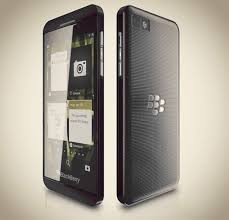
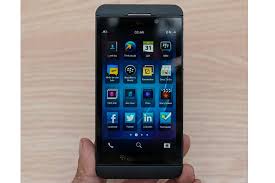
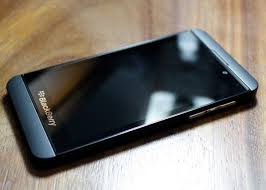
Looking at the Features of The Blackberry Z10.
As we all are aware, the multi-hype that greeted the birth of the Blackberry smartphone that is deemed by the pundits to challenge, and even unsit the iphones and Galaxy tabs has come and will leave us gradually (too early to say, you may muse). The mobile phone has been greeted with open arms by many; this leads us to take a close look at the phone itself, and inform the intending buyers, the characteristics the phone possess.
*** This article is not based on hands-on experience; it is a sequence of web commentaries and load-types of most website reviews. ***

Now, the BlackBerry Z10 is an all-touchscreen device sporting a 4.2-inch 1280x768 display and 365DPI making it a higher resolution display than the Apple iPhone 5.
It's BlackBerry's first 4G smartphone and will initially be available on 4G through EE who are currently the only network capable of supporting the superfast mobile data service.
Under the hood there's a 1.5GHz dual-core processor along with a very meaty 2GB of RAM which will no doubt have been put in to tackle the advanced multi-tasking and image-editing that has been included in BB10. Taking on the world of Google Wallet and the Android operating system, the Z10 also comes with NFC and Bluetooth 4.0.
There's an 8MP snapper on the back capable of recording 1080p and a 2MP camera on the front with 720p recording and for BBM Video calls. The Z10 comes with 16GB of storage along with a Micro SD slot which can be expanded up to 32GB.
BlackBerry World
BlackBerry has confirmed that it will be getting some big name apps to rivals Apple's iTunes store with Amazon Kindle, WhatsApp, LinkedIn, Facebook and Twitter all heading to the new OS.
*** This article is not based on hands-on experience; it is a sequence of web commentaries and load-types of most website reviews. ***
Now, the BlackBerry Z10 is an all-touchscreen device sporting a 4.2-inch 1280x768 display and 365DPI making it a higher resolution display than the Apple iPhone 5.
It's BlackBerry's first 4G smartphone and will initially be available on 4G through EE who are currently the only network capable of supporting the superfast mobile data service.
Under the hood there's a 1.5GHz dual-core processor along with a very meaty 2GB of RAM which will no doubt have been put in to tackle the advanced multi-tasking and image-editing that has been included in BB10. Taking on the world of Google Wallet and the Android operating system, the Z10 also comes with NFC and Bluetooth 4.0.
There's an 8MP snapper on the back capable of recording 1080p and a 2MP camera on the front with 720p recording and for BBM Video calls. The Z10 comes with 16GB of storage along with a Micro SD slot which can be expanded up to 32GB.
BlackBerry World
BlackBerry has confirmed that it will be getting some big name apps to rivals Apple's iTunes store with Amazon Kindle, WhatsApp, LinkedIn, Facebook and Twitter all heading to the new OS.
Wednesday, 16 January 2013
Before You Buy That Samsung Galaxy 2, Read This Review.
Just before you join them in buying that smartphone (pardon me, the
bandwagon effect is massive pull in this part of the world), you are
entitled, at least so to say, to be informed about the basic tenets of
the device. Now, Samsung took a big risk with its first Galaxy Note device. At 5.3-in., the device's screen was almost comically large for a smartphone. That, combined with the Note's seemingly retro stylus, led to plenty of skepticism and outright ridicule.

Samsung's Galaxy Note II keeps the same basic concept as the original Note but adds higher- quality components and new software twists. So how does it all stack up? I spent several days using the Note II to find out.
The Body and display
When you hold the Galaxy Note II, one thing is immediately clear: This is a Samsung-made phone. The new Note follows Samsung's design aesthetic and in many ways looks like a supersized Galaxy S III. The device is very plasticky; it has a removable silver-colored rear panel that feels thin and flimsy when pulled off. That said, the Note II certainly doesn't look cheap; it has a sleek and contemporary appearance with shiny, reflective surfaces and visually pleasing curves.


Of course, the size is the real eye-catching thing about the Note II: he phone is a whopping 3.2 x 5.9 x 0.4 in., longer but slightly narrower than the first-gen Note's 3.3 x 5.8 x 0.4 in. frame. At 6.3 oz., it isn't unbearably heavy -- but, for better or for worse, it's definitely a bulky device. Personally, I found the Note II a bit awkward and unnatural to hold; it's too big to use with a single hand, like a typical smartphone, and too small to use like a traditional tablet (even a relatively small one like the Nexus 7).


Moreso, I also found the Note II rather uncomfortable to carry around. While it did fit into the pocket of my
jeans, it was always either in my way or on the verge of falling out. Sitting down was particularly challenging.
If you can get used to the size, though, the Note II's 5.5-in. HD Super AMOLED screen is a beaut. The
1280 x 720 display gives you ample room for Web browsing, video-watching or whatever your tech- loving heart desires. It's crisp, clear and bright (although you may have to deactivate Samsung's often-wonky auto-brightness setting to get the best results).
Smartphone enthusiasts will be happy to know it doesn't utilize Pentile technology, which is frequently criticized for causing jagged edges and lower-quality views. Samsung's Galaxy Note II has a volume rocker on its left side, a headphone jack on its top, and a power button about a third of the way down its right edge.
On the bottom of the phone sits a standard micro-USB port that -- with the use of a special adapter that's priced at $40 (about N6,400) on Samsung's website -- can double as an HDMI out port to let you hook the phone up to your TV and watch your videos on a large display. The bottom of the device also houses a slot where the S Pen stylus resides (more on that in a bit).
Following the example of its Galaxy S III smartphone, Samsung has opted to use an odd mix of physical and capacitive navigation buttons in place of the virtual on-screen buttons Google recommends for modern Android devices. The Note II has a physical home button flanked by capacitive menu and back buttons, the latter two of which light up for just a couple of seconds when you touch the screen and remain invisible otherwise. This setup results in several unfortunate issues that I outlined in great detail in the "Buttons" section of my Galaxy S III review.

The Note II has a single small speaker on its back. The speaker is surprisingly good: Audio is loud, clear and relatively full-sounding. There is one design-related disappointment: The grill covering the speaker protrudes awkwardly from the phone's back plate, creating a rough and rather sharp spot in an otherwise smooth and consistent surface. (As a result, when you set the phone down on its back, it actually rocks back and forth very slightly.)
Under the hood.
Samsung's Galaxy Note II runs on a 1.6GHz quad-core processor along with a full 2GB of RAM. The
result is a blazingly fast smartphone experience with no noticeable slowdowns or stutters; from app loading to Web browsing and even multitasking, the Note II's performance is consistently impressive. Also impressive is the device's stamina: While it's no Droid Razr Maxx HD, the Galaxy Note II packs a
removable 3100mAh battery that provides more than enough juice to get you from morning to night. Even with the massive power-sucking screen, I found myself making it through full days of moderate usage with room to spare.


The Components.
The Note II comes with 16GB, 32GB or 64GB of internal storage. The Note II also has a slot for a microSD card under the phone's rear panel; that allows you to add up to 64GB of additional storage. The smartphone has an 8-megapixel rear-facing camera and a 1.9-megapixel front-facing lens. The main camera is quite good, and on a par with the setup used in Samsung's Galaxy S III phone. While I might give the HTC One X and HTC One S a slight edge in terms of both camera interface and image quality, Samsung's setup is certainly no slouch; photos taken on the Note II looked crisp and sharp with vibrant, true-to-life colors and superb detail.
Finally, there's the actual phone connectivity: Data performance over HSPA+ network was pleasantly zippy and consistent with typical 3G speeds.
One concern: On a few occasions, my Note II unit stopped connecting to the network, making
it impossible for me to make calls or utilize data. Powering the phone off and back on fixed the
problem.
Credit
Samsung's Galaxy Note II keeps the same basic concept as the original Note but adds higher- quality components and new software twists. So how does it all stack up? I spent several days using the Note II to find out.
The Body and display
When you hold the Galaxy Note II, one thing is immediately clear: This is a Samsung-made phone. The new Note follows Samsung's design aesthetic and in many ways looks like a supersized Galaxy S III. The device is very plasticky; it has a removable silver-colored rear panel that feels thin and flimsy when pulled off. That said, the Note II certainly doesn't look cheap; it has a sleek and contemporary appearance with shiny, reflective surfaces and visually pleasing curves.
Of course, the size is the real eye-catching thing about the Note II: he phone is a whopping 3.2 x 5.9 x 0.4 in., longer but slightly narrower than the first-gen Note's 3.3 x 5.8 x 0.4 in. frame. At 6.3 oz., it isn't unbearably heavy -- but, for better or for worse, it's definitely a bulky device. Personally, I found the Note II a bit awkward and unnatural to hold; it's too big to use with a single hand, like a typical smartphone, and too small to use like a traditional tablet (even a relatively small one like the Nexus 7).
Moreso, I also found the Note II rather uncomfortable to carry around. While it did fit into the pocket of my
jeans, it was always either in my way or on the verge of falling out. Sitting down was particularly challenging.
If you can get used to the size, though, the Note II's 5.5-in. HD Super AMOLED screen is a beaut. The
1280 x 720 display gives you ample room for Web browsing, video-watching or whatever your tech- loving heart desires. It's crisp, clear and bright (although you may have to deactivate Samsung's often-wonky auto-brightness setting to get the best results).
Smartphone enthusiasts will be happy to know it doesn't utilize Pentile technology, which is frequently criticized for causing jagged edges and lower-quality views. Samsung's Galaxy Note II has a volume rocker on its left side, a headphone jack on its top, and a power button about a third of the way down its right edge.
On the bottom of the phone sits a standard micro-USB port that -- with the use of a special adapter that's priced at $40 (about N6,400) on Samsung's website -- can double as an HDMI out port to let you hook the phone up to your TV and watch your videos on a large display. The bottom of the device also houses a slot where the S Pen stylus resides (more on that in a bit).
Following the example of its Galaxy S III smartphone, Samsung has opted to use an odd mix of physical and capacitive navigation buttons in place of the virtual on-screen buttons Google recommends for modern Android devices. The Note II has a physical home button flanked by capacitive menu and back buttons, the latter two of which light up for just a couple of seconds when you touch the screen and remain invisible otherwise. This setup results in several unfortunate issues that I outlined in great detail in the "Buttons" section of my Galaxy S III review.
The Note II has a single small speaker on its back. The speaker is surprisingly good: Audio is loud, clear and relatively full-sounding. There is one design-related disappointment: The grill covering the speaker protrudes awkwardly from the phone's back plate, creating a rough and rather sharp spot in an otherwise smooth and consistent surface. (As a result, when you set the phone down on its back, it actually rocks back and forth very slightly.)
Under the hood.
Samsung's Galaxy Note II runs on a 1.6GHz quad-core processor along with a full 2GB of RAM. The
result is a blazingly fast smartphone experience with no noticeable slowdowns or stutters; from app loading to Web browsing and even multitasking, the Note II's performance is consistently impressive. Also impressive is the device's stamina: While it's no Droid Razr Maxx HD, the Galaxy Note II packs a
removable 3100mAh battery that provides more than enough juice to get you from morning to night. Even with the massive power-sucking screen, I found myself making it through full days of moderate usage with room to spare.
The Components.
The Note II comes with 16GB, 32GB or 64GB of internal storage. The Note II also has a slot for a microSD card under the phone's rear panel; that allows you to add up to 64GB of additional storage. The smartphone has an 8-megapixel rear-facing camera and a 1.9-megapixel front-facing lens. The main camera is quite good, and on a par with the setup used in Samsung's Galaxy S III phone. While I might give the HTC One X and HTC One S a slight edge in terms of both camera interface and image quality, Samsung's setup is certainly no slouch; photos taken on the Note II looked crisp and sharp with vibrant, true-to-life colors and superb detail.
Finally, there's the actual phone connectivity: Data performance over HSPA+ network was pleasantly zippy and consistent with typical 3G speeds.
One concern: On a few occasions, my Note II unit stopped connecting to the network, making
it impossible for me to make calls or utilize data. Powering the phone off and back on fixed the
problem.
Credit
Subscribe to:
Posts (Atom)